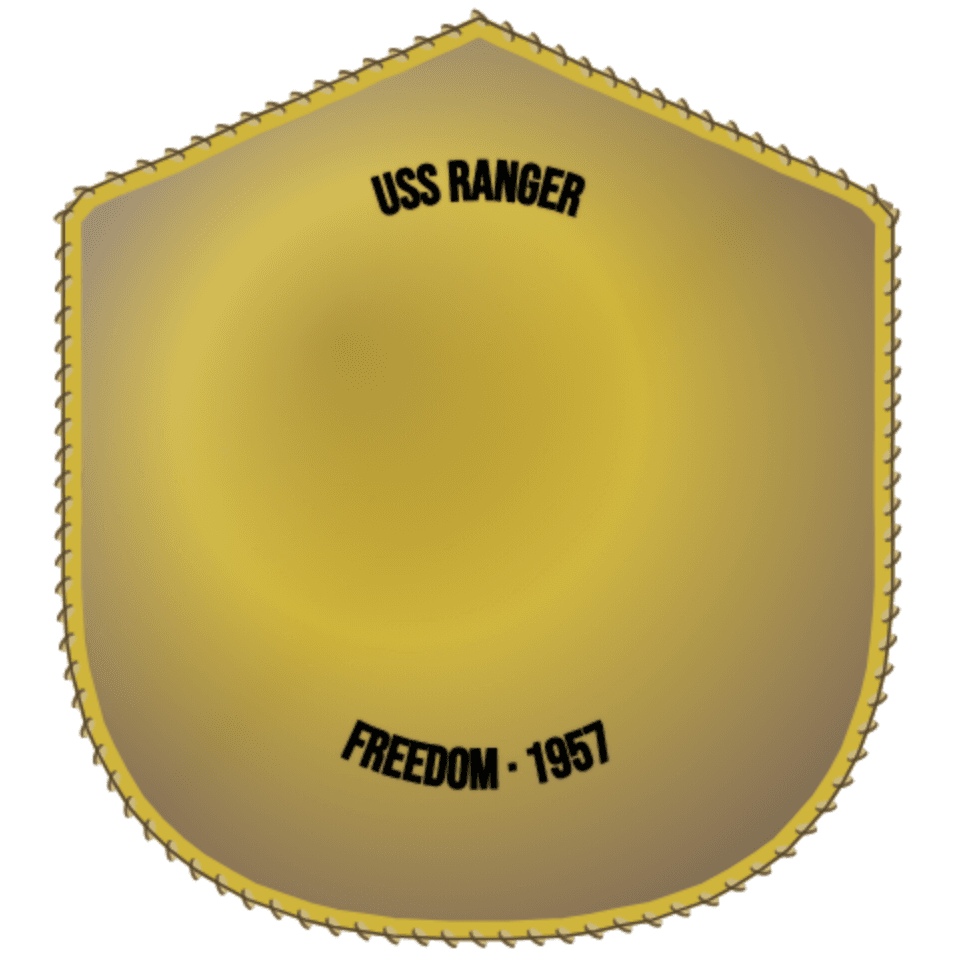
A challenge coin is a small medallion — typically 1.5" to 2" across — carried as a token of identity, membership, or recognition. Each one is custom-designed for a specific unit, agency, or organization. What makes it a challenge coin is the social ritual: when one member produces theirs, every other member present is expected to produce their own or buy a round.
That's the short answer. The longer one covers about a hundred years of history, every U.S. military branch, the entire first responder world, and a growing corporate culture that's adopted the practice as its own. Here's everything worth knowing about challenge coins.
THE ORIGIN STORY
The most-told origin story dates to World War I, with the U.S. Army Air Service. A wealthy officer in a flying squadron had bronze medallions struck for each man in his unit, each bearing the squadron's insignia. One pilot wore his in a leather pouch around his neck.
Shot down over German lines, the pilot was captured but escaped during an Allied bombardment. After making his way across the front, he was picked up by a French patrol who took him for a German saboteur — he had no identification and didn't speak French. Just as he was about to be executed, he produced his squadron medallion. A French soldier recognized the insignia. His life was spared. He was given a bottle of wine instead of a bullet, returned to his squadron, and the story spread.
From then on, the squadron tradition was simple: carry your coin at all times. If a fellow squadron member challenged you to produce it and you couldn't, you bought the drinks. If you could, the challenger bought. The "coin check" was born.
FROM WORLD WAR I TO TODAY
The practice quieted between the wars but never disappeared. Korea and Vietnam expanded it dramatically — U.S. Army Special Forces in Vietnam are credited with formalizing the modern challenge coin tradition, with the 10th and 11th Special Forces Groups having unit coins struck for their members. Air Force pilots, particularly in fighter and reconnaissance squadrons, adopted the practice in parallel. By the end of Vietnam, challenge coins were a fixture of U.S. military culture.
The 1980s and 1990s formalized the command coin: personal pieces senior leaders carry to hand out as on-the-spot recognition. By the Gulf War, command coins were embedded across every U.S. service. The practice extended up to Joint Chiefs of Staff coins, Secretary of Defense coins, and ultimately Presidential challenge coins — the highest-tier recognition pieces in U.S. military culture.
From the mid-1990s onward, the tradition crossed into law enforcement, fire, and EMS culture. Today, every major U.S. police department has at least one coin program; most have several. Fire departments run similar programs at station and battalion level. EMS agencies have adopted the Star of Life motif. And in the past fifteen years, corporate adoption has accelerated — sales kickoffs, IPO commemoratives, employee anniversaries, and founders'- club VIP coins all now share the form.
THE COIN CHECK
The original ritual the form is named for varies from unit to unit but follows the same general structure. A member slams their coin on the bar (or table). Everyone else present has a grace period (typically a few seconds) to produce their coin. Anyone who can't pays for the next round. If everyone produces a coin, the person who issued the challenge pays.
Rules vary: some units allow you to reach for a coin only as far as you'd have to reach to draw a weapon; some disallow coins kept in wallets; some require the coin to be cleanly produced from a pocket rather than fumbled. The general spirit is consistent: always carry your coin. Forgetting it is the worst-case scenario.
WHO CARRIES THEM TODAY
Military: every branch — Navy, Marine Corps, Army, Air Force, Space Force, Coast Guard. Unit identifier coins, command coins, deployment commemoratives, change-of-command pieces, retirement coins, memorial coins. The U.S. military is by far the largest coin-carrying community.
First responders: police departments, sheriff's offices, federal agencies, fire houses, EMS agencies, 911 dispatch centers. Department coins, unit coins (SWAT, K-9, detective), promotion coins, academy graduation coins, chief's awards, memorial pieces, joint mutual-aid commemoratives.
Government: elected officials (including U.S. Presidents), agency leaders, intelligence community personnel, diplomatic and foreign service staff. Government challenge coins often carry the office's seal and serve as on-the-spot recognition from senior officials.
Corporate: sales kickoffs, employee recognition programs, executive gifts, milestone events, founders' clubs, trade show giveaways. Particularly common in companies with strong veteran presence or in sales-driven organizations that need a recognition program with weight.
Civic and fraternal: Masonic lodges, motorcycle clubs, fraternal orders, civic organizations, even video game communities. The form has spread far beyond any single culture.
DESIGNING ONE
Modern challenge coin design follows conventions developed over decades: a clear unit, command, or organization identifier on the front; a motto, hull number, dates, or commemorative element on the back; a finish that reads well in pocket carry. What's changed in the past several years is how the design process works — where ordering a coin once required a back-and-forth email chain with a manufacturer's in-house designer, you can now build the entire concept yourself in our free online challenge coin designer and submit it for a refined production proof. Free, no signup, no payment until you approve the final art.
See more on the full history of challenge coins, construction options, or every customization choice you can make.